

Executive brief
The NIH Kidney Artificial Intelligence Discovery Challenge, titled From Nebulae to Nephrons, asks researchers and technologists to use artificial intelligence, machine learning, computer vision, and related computational methods to find previously unrecognized patterns in kidney data. The challenge draws on information generated by the Kidney Precision Medicine Project, including kidney tissue images, multi-omics data, spatial data, and associated clinical information.
The prize purse is $100,000. The strategic value is much larger.
This initiative matters because kidney disease is not one simple condition moving along one predictable path. It is a collection of biological processes, tissue changes, clinical histories, environmental pressures, and treatment responses that often appear similar at the bedside while behaving differently underneath. Precision nephrology depends on seeing those differences clearly enough to improve research questions, patient stratification, therapeutic discovery, and eventually clinical decision-making.
That is the opportunity. It is also the warning.
AI can reveal patterns that human investigators did not know to seek. It can also produce persuasive noise, unstable correlations, and technically impressive results that do not survive validation. The machine should do machine work. Human beings must still decide what is true, what is useful, what is safe, and what deserves to move forward.
What happened
The National Institutes of Health and the National Institute of Diabetes and Digestive and Kidney Diseases are advancing a national challenge built around anomaly detection in kidney research. The concept borrows from astronomy and other data-intensive sciences, where computational tools can search enormous image collections for rare structures that conventional review may overlook.
The kidney challenge applies that logic to data from the Kidney Precision Medicine Project. KPMP is building a detailed view of kidney tissue from people living with chronic kidney disease or acute kidney injury. Its work includes a Kidney Tissue Atlas that maps cell types, tissue structures, disease pathways, and potential therapeutic targets.
Instead of asking an algorithm only to sort known categories, the challenge asks a more difficult question: what is present in the data that the established categories may not explain?
That distinction is important. Classification looks for what we already recognize. Anomaly detection searches for what does not fit. In medicine, the outlier may be an error. It may also be the beginning of a new disease signature, a subgroup of patients, a treatment-response pattern, or a biological mechanism that deserves deeper study.
The order matters. Discovery comes first. Validation follows. Translation comes after that. Clinical use comes only when the evidence, governance, and operating environment are ready.
Why it matters
Kidney disease affects tens of millions of people in the United States. Yet the pathway from early damage to advanced disease is not uniform, and the same diagnosis can hide meaningful molecular and cellular differences. That makes kidney care a strong candidate for multimodal analysis.
A whole-slide tissue image may show structural change. Spatial data may show where important activity is occurring. Multi-omics data may reveal gene expression, proteins, metabolites, or other biological signals. Clinical information may show how the patient presented, progressed, or responded. Each layer is useful. Their combined relationships may be more useful still.
AI is well suited to searching those relationships at a scale no individual research team can manually reproduce. The promise is not that an algorithm replaces the nephrologist, pathologist, biologist, or patient. The promise is that computational methods can widen the field of view and bring unusual patterns forward for disciplined human investigation.
Read for decisions, not noise.
The decision for health systems, research institutions, technology companies, and funders is not whether AI belongs in kidney innovation. It already does. The real decision is how to build the evidence, infrastructure, partnerships, and safeguards that allow a discovery to become a trustworthy intervention.
Strategic implications
First, multimodal health data is becoming strategic infrastructure. Organizations that treat pathology images, molecular information, and clinical data as separate technical assets will struggle to create a coherent discovery environment. Interoperability, metadata quality, lineage, consent, access controls, and reproducibility are not back-office concerns. They determine whether the science can be trusted.
Second, rare-pattern discovery requires new kinds of teams. The strongest work will not come from data scientists operating alone or from clinical experts reviewing familiar outputs. It will require nephrologists, pathologists, computational biologists, machine-learning engineers, statisticians, data stewards, ethicists, and patients working across the same problem. The breakthrough may begin in code, but it must survive contact with biology and clinical reality.
Third, public challenges can expand the innovation base. A well-designed prize competition invites talent that may not normally work in nephrology. Researchers experienced in astronomy, geospatial analysis, materials science, fraud detection, or other anomaly-rich disciplines may bring methods that transfer in useful ways. Fresh computational eyes can create value, provided the domain experts remain close enough to challenge assumptions.
Fourth, the commercialization pathway must be designed early. A promising research signal is not yet a diagnostic tool, clinical workflow, reimbursement model, or investable company. Leaders should distinguish among discovery, validation, product development, regulatory strategy, clinical integration, and market adoption. Confusing those stages wastes capital and can put trust at risk.
Fifth, kidney innovation should be judged by patient value. Better models are not the final outcome. Earlier detection, clearer stratification, more precise treatment, fewer avoidable complications, stronger quality of life, and more equitable access are the outcomes that matter.
What leaders should do now
- Build a governed kidney-data inventory. Identify available imaging, molecular, spatial, laboratory, treatment, and outcomes data. Document provenance, permissions, quality, missingness, and access conditions.
- Select one decision problem. Do not begin with a vague ambition to use AI. Begin with a research or care question where better pattern recognition could change an action.
- Establish a validation ladder. Define how an interesting signal moves from computational discovery to retrospective validation, external replication, prospective study, and clinical evaluation.
- Create cross-disciplinary review. Require technical, biological, clinical, ethical, security, and patient perspectives before advancing a result.
- Plan for failure. Models will drift. Data will contain bias. Sites will differ. Some findings will disappear under external testing. A mature program makes those possibilities visible and recoverable.
- Protect the human relationship. Kidney disease can involve fear, fatigue, complex treatment, dialysis, transplant questions, family burden, and long-term uncertainty. Technology should increase clarity and time for care, not place another wall between the patient and the professional.
The Poe Perspective
I have spent years looking at technology, infrastructure, healthcare, energy, and institutional change through the same lens: what can this system do, who does it serve, and what must be true for it to work in the real world?
The NIH kidney AI challenge is powerful because it does not assume every important pattern has already been named. That posture takes humility. It says the data may contain something our current categories have not taught us to see.
But humility must work in both directions. We should be humble about what we have missed, and equally humble about what a model claims to have found.
Use technology aggressively, but never surrender judgment to it.
The future of precision nephrology will not be built by AI alone. It will be built by disciplined partnerships that combine computation with clinical wisdom, patient experience, responsible governance, and a clear path from discovery to measurable benefit. Complex ideas. Clear direction. Real movement.
Questions decision-makers should ask
- What clinical or research decision would this discovery improve?
- Is the model finding a reproducible biological signal or only a pattern in one dataset?
- Are the data representative of the patients and communities expected to benefit?
- Can another institution reproduce the finding with different equipment, workflows, and populations?
- Who is accountable when the evidence is uncertain or the model performs differently in practice?
- What regulatory, privacy, security, intellectual-property, and reimbursement questions must be resolved?
- How will patients and clinicians participate in design, validation, and implementation?
- What is the capital pathway from promising analysis to responsible deployment?
Move from insight to implementation
PoeTech Global Consulting helps healthcare leaders, research institutions, technology companies, investors, and public partners turn complex innovation into an executable strategy. That work can include opportunity assessment, partnership architecture, AI governance, data and infrastructure planning, funding strategy, commercialization pathways, and executive decision frameworks.
If your organization is working at the intersection of AI, kidney care, precision medicine, or health-system modernization, schedule a PoeTech strategic consultation. We will examine the opportunity, pressure-test the assumptions, identify the decision gates, and build a path that can survive contact with reality.
Source notes
• National Institutes of Health, Kidney Artificial Intelligence Discovery Challenge: From Nebulae to Nephrons https://www.nih.gov/challenges/kidney-artificial-intelligence-discovery-challenge-nebulae-nephrons
• National Institute of Diabetes and Digestive and Kidney Diseases, Kidney Precision Medicine Project https://www.kpmp.org/
About the author
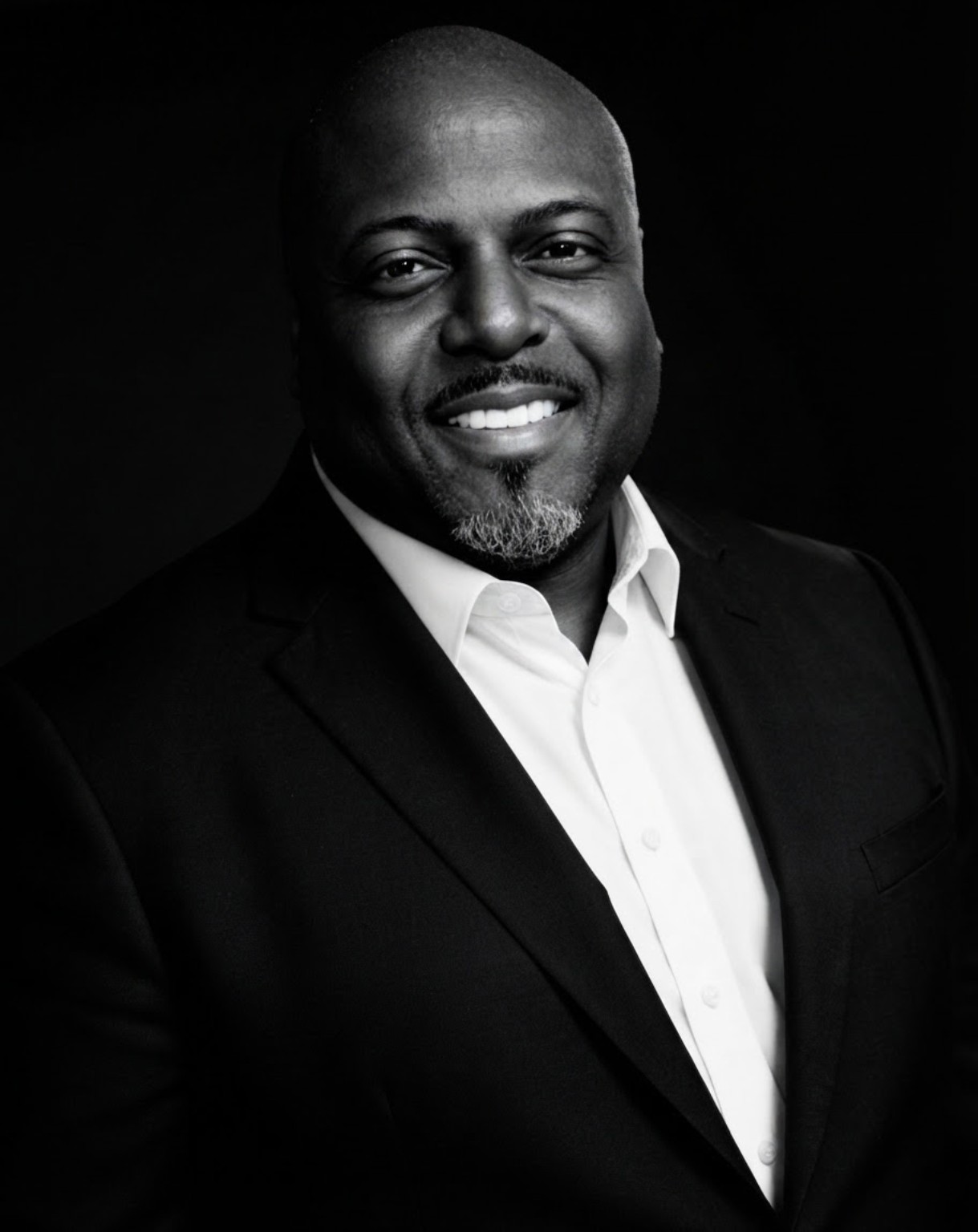
Rev. Dr. Gerald F. Poe Jr.
Founder and Chief Executive Consultant of PoeTech Global Consulting. Technologist, strategist, veteran, aviator, and cross-sector advisor with more than three decades of experience spanning AI, energy, sustainable data centers, telecommunications, UAS, healthcare innovation, public infrastructure, and venture development.