
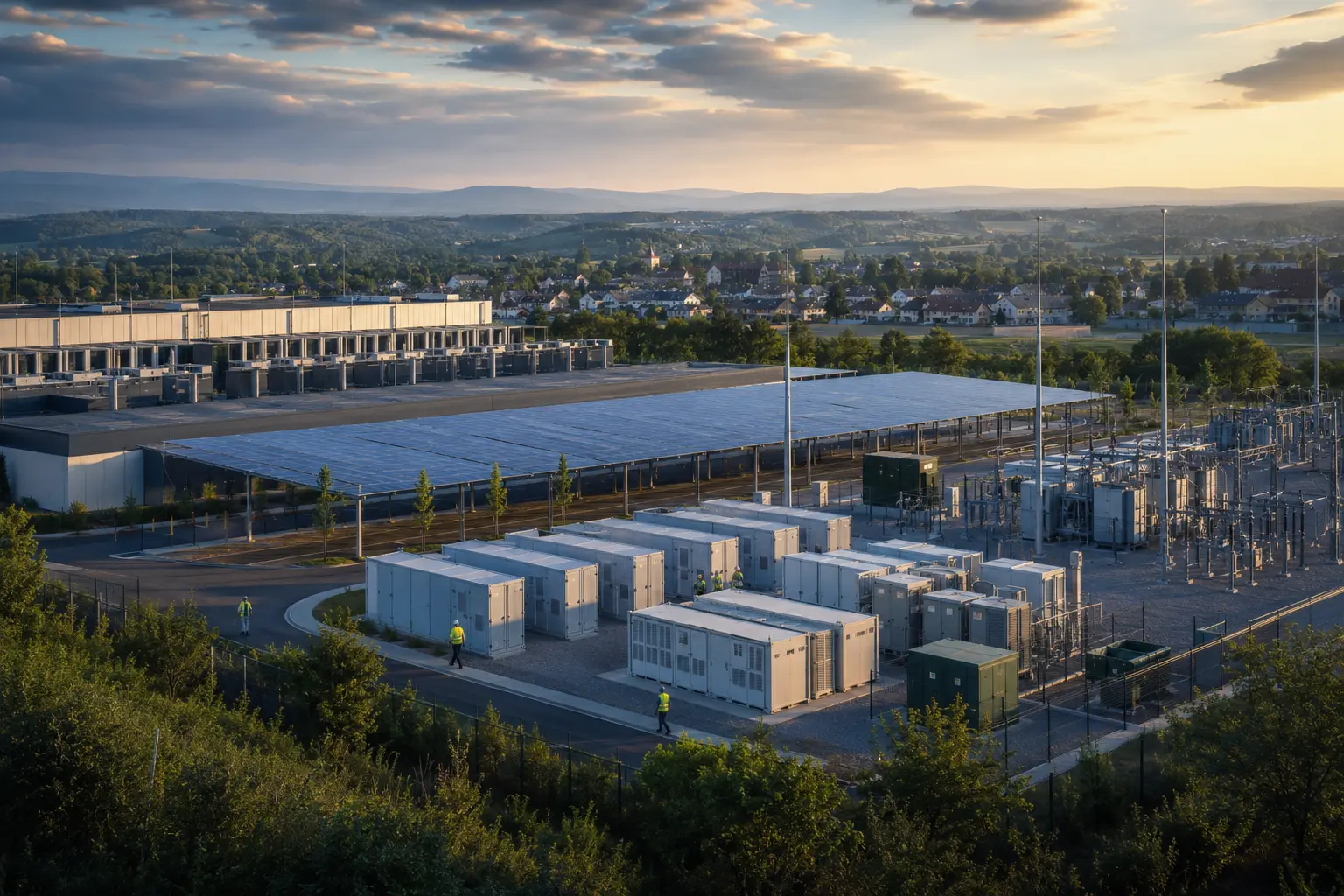
The Grid-Positive Data Center
Poe Knows
Data Centers & Energy
Executive brief
The data-center debate is too often reduced to megawatts and server racks. That framing is incomplete.
A serious implementation strategy begins with the community, the grid, the water system, the workforce, and the long-term value created after construction ends. It considers not only how much power a facility consumes, but also what infrastructure it enables, what constraints it creates, who carries the risk, and how the project performs over its full operating life.
A grid-positive data center does not pretend that large-scale computing requires no power. It is designed so that new clean generation, storage, demand flexibility, heat recovery, and resilient microgrids strengthen the surrounding system. The standard is measurable net benefit, not a green label.
This requires decisions across systems that are often planned separately: site selection, utility negotiation, energy architecture, permitting, water, workforce development, vendor strategy, financing, and public trust.
The order matters.
Site commitments made before energy, infrastructure, and community risks are understood can trap capital in a project that becomes slower, more expensive, or less resilient than expected. A better model integrates commercial discipline, technical design, public accountability, and operating reality before major commitments become difficult to reverse.
What happened
Data centers have become a visible point of tension between digital growth and physical infrastructure.
The underlying problem is not computing alone. It is the collision of several planning systems with different timelines, incentives, and measures of success.
A data-center owner may focus on capacity, speed to market, uptime, and total cost. A utility must consider generation, transmission, distribution, reliability, interconnection, and the effect of a large new load on other customers. Public leaders must assess land use, water, employment, tax structure, environmental impact, emergency readiness, and community acceptance. Investors must evaluate delivery risk, stranded capital, operating exposure, and long-term demand.
Each party may be making a rational decision within its own boundaries while the combined project remains poorly designed.
That is how an apparently attractive site can become a strategic liability. Land may be available while grid capacity is not. Power may be technically obtainable while the upgrade timeline is commercially unacceptable. A utility agreement may address energy supply without creating enough flexibility during constrained periods. Construction employment may be significant but temporary, while the permanent workforce plan remains vague.
The question, therefore, is not simply whether a data center can be built.
The question is whether it can be built, powered, permitted, financed, operated, and trusted without shifting disproportionate costs and risks onto the surrounding system.
Why it matters
Data centers are physical infrastructure supporting digital activity. Their consequences extend beyond the property line.
A project’s energy architecture can affect grid planning, local resilience, emissions objectives, operating costs, and future expansion. Its water strategy can create confidence or conflict depending on local conditions and the cooling technologies selected. Its workforce model can produce durable local capability or leave communities with limited value after construction ends.
These dimensions are connected.
For example, a design optimized only for low initial energy cost may create exposure to congestion, curtailment, price volatility, or delayed interconnection. A design optimized only for speed may rely on temporary generation arrangements that become difficult to replace. A project marketed around clean energy may still lack credible alignment between consumption, generation, timing, location, and grid conditions.
Public trust is equally operational.
Community opposition can slow permitting, complicate infrastructure agreements, and increase political risk. Yet trust cannot be secured through messaging alone. It depends on whether project sponsors can explain the project’s burdens, benefits, safeguards, and accountability mechanisms in terms that survive scrutiny.
This is why the grid-positive concept matters. It provides a more demanding standard than basic load accommodation. It asks whether the project contributes assets, flexibility, and resilience that improve the broader energy system.
Complex ideas. Clear direction. Real movement.
Strategic implications
The grid-positive data center changes the planning question from “How do we obtain enough power?” to “How do we create an energy system that supports both the facility and its host environment?”
That shift has several strategic implications.
First, site selection becomes a systems decision.
Land price and proximity to network infrastructure remain relevant, but they cannot be assessed in isolation. Decision-makers must evaluate the condition of the local grid, realistic interconnection pathways, generation opportunities, water availability, land-use constraints, infrastructure dependencies, workforce depth, public sentiment, and expansion options.
A site with a lower acquisition cost may be more expensive once grid upgrades, water infrastructure, schedule uncertainty, and political exposure are considered. Conversely, a higher-cost site may produce stronger long-term economics if it offers better infrastructure alignment and fewer execution barriers.
Second, utility engagement must begin earlier.
The utility is not merely a vendor selling electricity. It is a critical project partner operating within technical, regulatory, and financial constraints. Early engagement should distinguish between nominal capacity and deliverable capacity. It should clarify upgrade requirements, cost allocation, schedule assumptions, demand flexibility, backup arrangements, operating limits, and expansion scenarios.
Executives should resist optimistic language that is not supported by defined milestones and responsibilities. “Power available” can mean several different things. The commercial decision must be based on what capacity is available, when it will be available, under what conditions, and at whose cost.
Third, energy architecture becomes part of enterprise strategy.
A grid-positive campus may combine grid supply, new clean generation, energy storage, flexible computing loads, resilient microgrids, and other energy resources. The precise configuration depends on the site and operating mission.
The objective is not to install every available technology. It is to create a coherent portfolio.
Storage may improve resilience and demand management, but its value depends on duration, controls, operating strategy, degradation, and market rules. On-site generation may reduce certain risks while introducing fuel, permitting, maintenance, emissions, or supply-chain considerations. Flexible workloads may support the grid, but only if service-level commitments and computing architectures permit meaningful adjustment.
Heat recovery also deserves disciplined evaluation. Data centers generate heat, but the existence of waste heat does not automatically create a useful heat-recovery project. The opportunity depends on temperature, distance to a viable user, infrastructure cost, seasonal demand, contractual structure, and long-term reliability.
Fourth, water must be treated as a strategic constraint.
Cooling decisions affect energy efficiency, water consumption, capital cost, operational complexity, and site suitability. There is no universal answer. The correct design must reflect climate, water stress, discharge requirements, reliability expectations, and the relative value of energy and water within the host region.
A project should not claim environmental leadership by improving one metric while concealing deterioration in another.
Fifth, the value proposition must extend beyond construction.
Construction activity can provide important economic value. But public leaders should also examine permanent jobs, supplier participation, technical training, infrastructure improvements, emergency coordination, tax arrangements, and future industrial development.
The strongest projects create durable capability. They help communities prepare workers for technical roles, strengthen local institutions, and build infrastructure with uses beyond a single campus.
What leaders should do now
Leaders should adopt a staged decision framework before committing substantial capital.
- Define the operating mission. Establish the required computing capacity, uptime expectations, growth profile, latency constraints, workload flexibility, security requirements, and acceptable operating risks.
- Establish nonnegotiable site criteria. Include realistic power delivery, water conditions, network connectivity, land control, permitting pathways, workforce capacity, resilience, and community compatibility.
- Model total system cost. Look beyond land, construction, and electricity rates. Include interconnection, grid upgrades, water infrastructure, backup systems, financing delays, compliance, storage replacement, operational constraints, and potential schedule slippage.
- Test multiple energy portfolios. Compare combinations of grid supply, clean generation, storage, demand flexibility, microgrids, and backup resources. Evaluate cost, reliability, emissions, scalability, and implementation risk under multiple scenarios.
- Negotiate utility responsibilities clearly. Define milestones, cost allocation, engineering assumptions, capacity rights, operating conditions, curtailment provisions, upgrade schedules, and remedies for delay.
- Create a water budget before final design. Determine the water implications of each cooling approach under ordinary, extreme, and constrained conditions. Align technical choices with local water realities.
- Build community value into the project structure. Identify workforce pathways, supplier opportunities, infrastructure contributions, public safeguards, and reporting commitments before seeking broad support.
- Establish measurable grid-positive criteria. Possible categories include new generation enabled, storage capacity, flexible demand, contribution to resilience, avoided infrastructure pressure, water performance, heat use, and community benefits. Metrics should be specific to the project and independently understandable.
- Assign cross-functional accountability. Energy, real estate, engineering, finance, public affairs, legal, workforce, and operations should not make sequential decisions without a shared governance structure.
- Preserve decision gates. Capital should be released as critical uncertainties are resolved. Land control, interconnection, permitting, infrastructure, and commercial agreements should advance through explicit approval stages.
Read for decisions, not noise.
The purpose of analysis is not to produce a larger document. It is to identify which assumptions can break the project, which commitments are premature, and which actions preserve strategic options.
The Poe Perspective
Grid-positive is not a slogan. It is a design and governance discipline.
A data center cannot be considered beneficial merely because it purchases clean energy, announces a large investment, or installs visible technology. Those actions may matter, but they do not settle the central question.
Does the full system create durable value while managing its burdens honestly?
The answer must account for timing, location, infrastructure, operating behavior, and community conditions. It must distinguish contractual claims from physical performance. It must recognize that resilience for the campus should not produce fragility elsewhere.
Strategy must survive contact with reality.
That means pressure-testing the project against delayed interconnection, higher infrastructure costs, changing operating requirements, water constraints, vendor underperformance, community resistance, and expansion demand. It also means recognizing opportunity. A properly structured project can help enable new generation, provide flexible load, support storage deployment, improve local resilience, develop technical talent, and strengthen regional infrastructure.
The choice is not growth or responsibility.
The real choice is fragmented growth or disciplined growth.
Questions decision-makers should ask
- What does “power available” mean in contractual, technical, and scheduling terms?
- Which grid upgrades are required, who pays for them, and who bears delay risk?
- How will the campus perform during grid constraints, extreme conditions, or equipment failure?
- Which workloads can be shifted, reduced, or rescheduled without violating service commitments?
- What new generation or storage is directly enabled by the project?
- How are clean-energy claims aligned with the timing and location of consumption?
- What are the project’s water requirements under normal and stressed conditions?
- Is heat recovery supported by a credible user, infrastructure plan, and commercial agreement?
- What permanent community value remains after construction?
- Which project benefits are enforceable, measurable, and publicly reportable?
- What assumptions would make the site uneconomic or undeliverable?
- At which decision gates can leaders pause, redesign, relocate, or exit?
Move from insight to implementation
PoeTech helps owners and communities connect site selection, utility negotiation, energy architecture, permitting, workforce development, vendor strategy, and public trust before capital is trapped in a poorly designed project.
A focused PoeTech strategic consultation can examine a proposed campus through five connected lenses: site viability, energy and water architecture, delivery risk, community value, and governance.
The consultation should begin with the decisions at hand. It can identify critical assumptions, expose gaps between commercial promises and physical constraints, clarify stakeholder responsibilities, and establish practical decision gates. The resulting direction can support utility discussions, investment review, technical procurement, public engagement, and implementation planning.
This is not a substitute for detailed engineering, legal review, environmental analysis, or regulatory approval. It is the strategic integration required to make those disciplines work toward the same outcome.
The goal is straightforward: a project that can be financed, delivered, operated, expanded, and defended on the merits.
Source notes
No external source notes were included in the supplied draft. The article preserves the draft’s core framework and expands it through strategic analysis without adding unsupported statistics, quotations, project claims, or asserted outcomes.
About the author
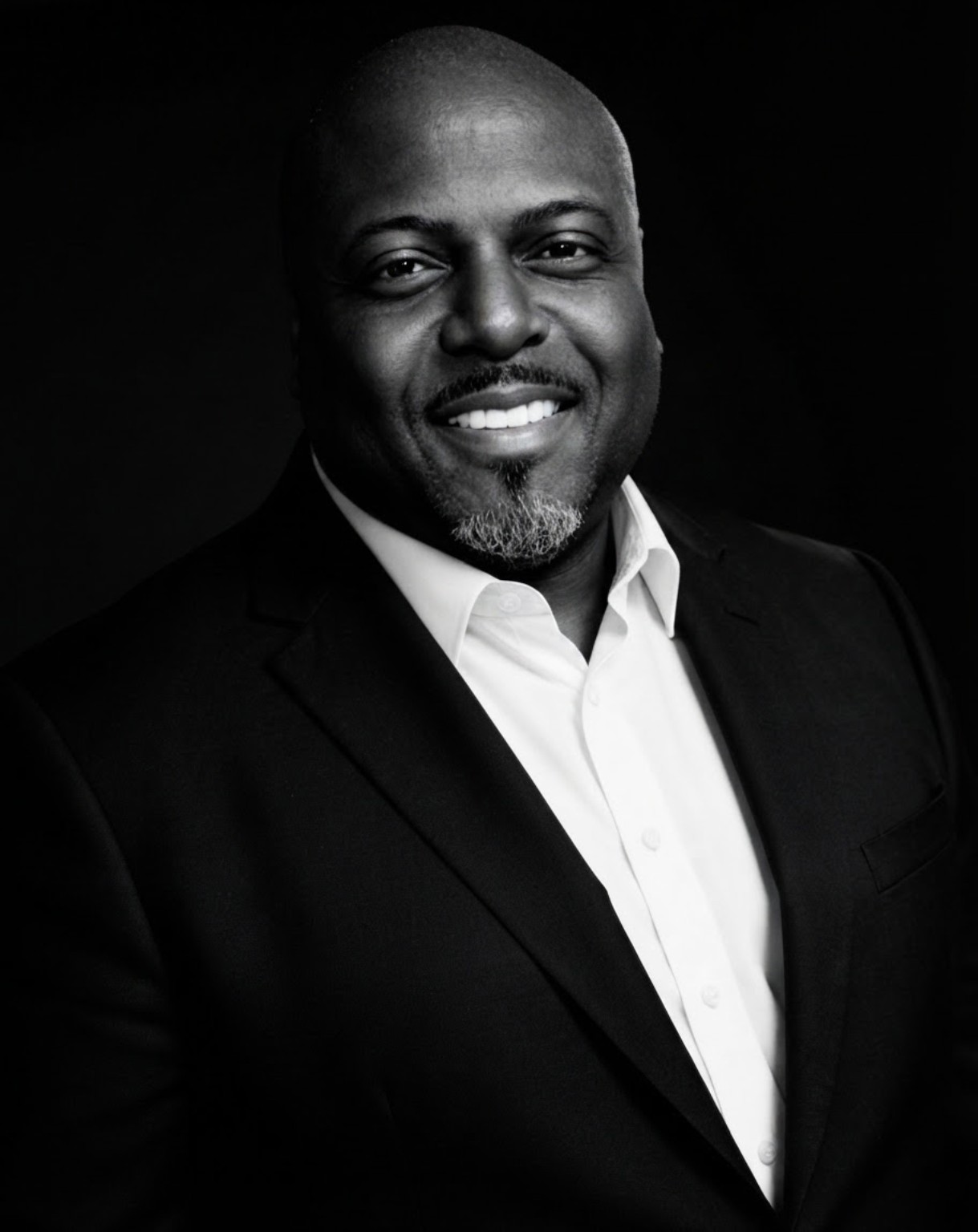
Rev. Dr. Gerald F. Poe Jr.
Founder and Chief Executive Consultant of PoeTech Global Consulting. Technologist, strategist, veteran, aviator, and cross-sector advisor with more than three decades of experience spanning AI, energy, sustainable data centers, telecommunications, UAS, healthcare innovation, public infrastructure, and venture development.