
Modernization Without Theater
Poe Knows | Digital Modernization
Executive brief
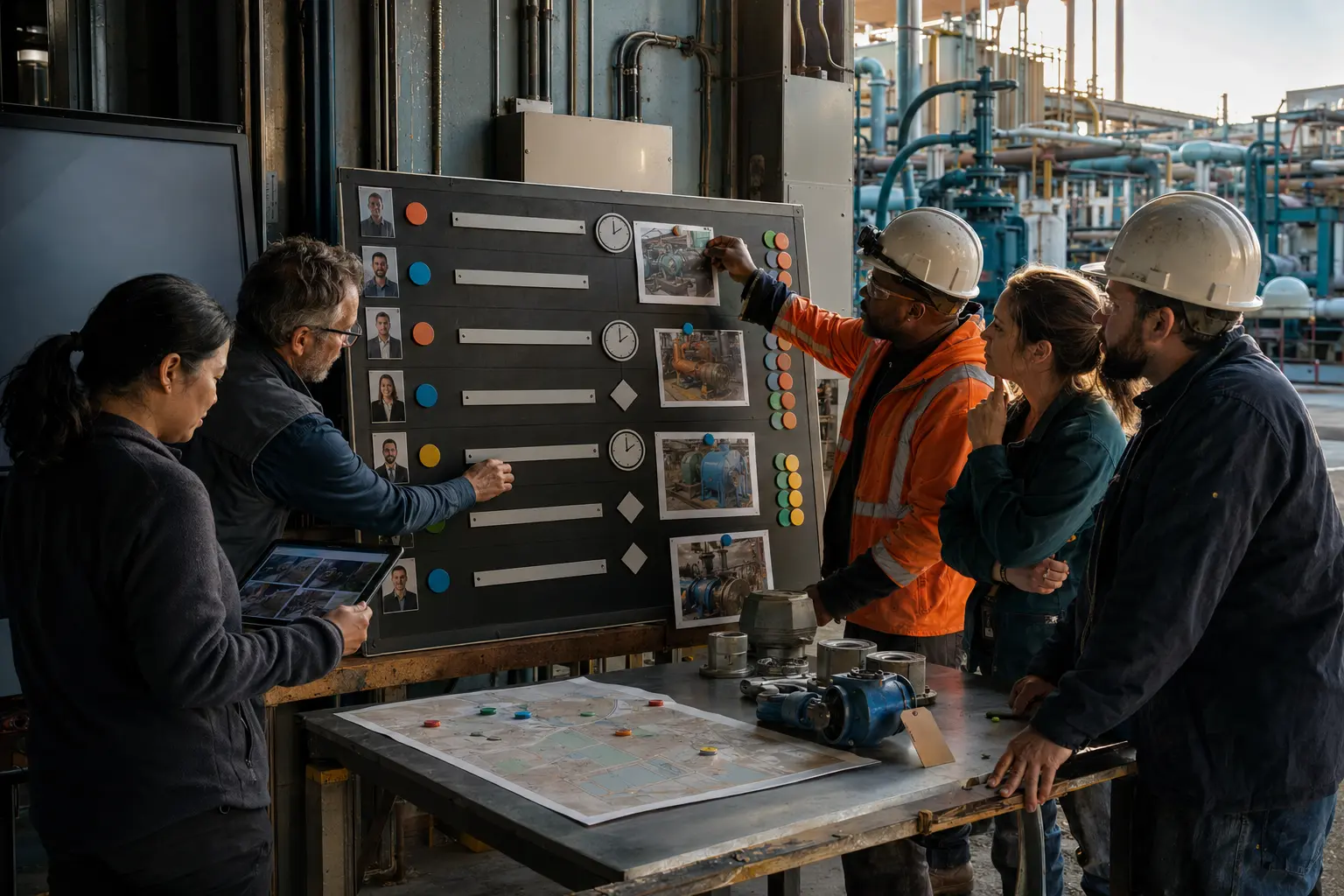
Organizations rarely suffer from a shortage of modernization activity. Dashboards multiply. Workshops fill calendars. Pilots generate attention. New platforms are announced.
Yet activity is not transformation.
Modernization fails when leaders cannot establish a common operating truth, make binding decisions, assign accountable ownership, and sustain execution across organizational boundaries. The result is modernization theater: visible motion without durable operational change.
A credible modernization program does five things:
- Establishes an agreed view of the current operating environment.
- Identifies the few constraints that govern progress.
- Connects each initiative to a named owner, committed budget, practical timetable, and measurable outcome.
- Defines the decisions required from executives, operators, technologists, finance leaders, and risk owners.
- Measures value in terms of operational performance, not presentation volume.
Technology matters. Architecture matters. Data quality, security, procurement, workforce capability, and governance matter. But disciplined execution determines whether any of them survive contact with reality.
The order matters.
Leaders must understand the operating problem before selecting the intervention. They must clarify accountability before adding coordination mechanisms. They must define the outcome before funding the activity. They must confront constraints before promising speed.
Modernization becomes credible when the organization can explain what will change, why it must change, who is responsible, what decisions are pending, and how progress will be verified.
What happened
Many organizations have built modernization portfolios that appear comprehensive but operate as collections of loosely related projects.
One team replaces infrastructure. Another adopts cloud services. A third introduces automation. Business units purchase specialized applications. Data teams build new reporting layers. Cybersecurity leaders add controls. Consultants conduct assessments. Executives receive dashboards summarizing all of it.
Each activity may have merit. The problem is that merit at the project level does not automatically produce value at the enterprise level.
Fragmented ownership creates predictable gaps.
A technology leader may own the platform but not the business process. An operational executive may own the outcome but not the budget. Finance may control funding without controlling dependencies. Security may approve the design but not the implementation sequence. Procurement may govern the acquisition while lacking authority over adoption.
Everyone participates. No one owns the whole result.
The dashboard then becomes a substitute for decision-making. Status categories are updated. Milestones are reported. Risks are recorded. But the underlying questions remain unresolved:
- Which operating constraint is this initiative removing?
- What must stop for the new model to work?
- Who has authority to resolve cross-functional conflicts?
- Which dependency could invalidate the timetable?
- What evidence will demonstrate that the organization is performing differently?
Without clear answers, modernization becomes a reporting system around unresolved ambiguity.
Pilot programs can produce the same distortion. A pilot may prove that a technology works in a controlled environment. It does not necessarily prove that the organization can fund, secure, integrate, govern, operate, and scale it. Technical feasibility is only one test. Operational viability is the harder one.
Workshops also have limits. They can reveal assumptions, align terminology, and clarify choices. They cannot replace executive commitment. A workshop that ends without decisions, owners, deadlines, and consequences has produced discussion, not movement.
This is how modernization theater develops. It is rarely caused by a deliberate attempt to mislead. More often, organizations confuse evidence of effort with evidence of progress.
Why it matters
Modernization is not simply a technology agenda. It is a question of institutional performance.
A weak modernization program consumes money, leadership attention, workforce capacity, and political capital while preserving the conditions it was meant to change. Legacy processes remain in place. New systems are layered over old systems. Manual workarounds continue. Data is duplicated. Accountability becomes harder to trace.
The organization becomes more complex without becoming more capable.
That distinction matters to every stakeholder.
Executives need confidence that investment is producing operational value. Investors need to understand whether technology spending improves resilience, efficiency, growth capacity, or strategic positioning. Public leaders must determine whether modernization strengthens service delivery, stewardship, transparency, and mission execution. Technical decision-makers need stable priorities and clear authority to make architectural choices that will endure.
When modernization lacks operating discipline, each group sees a different version of reality. The board sees a portfolio. Finance sees a cost structure. technology teams see systems and dependencies. Operators see workflow disruption. Users see whether the service works.
A credible program connects these views.
It also makes tradeoffs visible. Modernization may require leaders to retire familiar systems, standardize processes, reduce local variation, sequence benefits over time, and accept temporary disruption. Those choices cannot be delegated entirely to a program office. They are leadership decisions because they determine where the institution will absorb cost, risk, and change.
The central issue is not whether an organization is busy modernizing.
The issue is whether it is becoming measurably better able to execute its mission.
Strategic implications
Modernization should be governed as an operating transformation supported by technology, not as a technology portfolio loosely associated with strategy.
That shift carries several implications.
First, the unit of analysis must be the operating outcome.
Projects describe what the organization is building or buying. Outcomes describe what the organization will be able to do differently. A platform deployment is an activity. Faster decision cycles, fewer manual handoffs, more reliable service, stronger control, or improved capacity are outcomes.
Second, architecture must follow strategic intent while constraining impractical ambition.
Architecture determines how data, applications, infrastructure, security, and integration work together. It shapes future cost and flexibility. But an elegant target architecture has little value if the organization cannot migrate toward it, fund it, secure it, or operate it.
Strategy must survive contact with reality.
Third, portfolio size must reflect execution capacity.
Organizations often approve more initiatives than their people, governance structures, procurement systems, and operating teams can absorb. The result is divided attention, competition for scarce specialists, unresolved dependencies, and superficial adoption.
Prioritization is therefore not an administrative exercise. It is a declaration of what matters enough to receive concentrated institutional effort.
Fourth, modernization risk extends beyond technical failure.
Leaders should examine at least five forms of risk:
- Strategic risk: The initiative may not address a material institutional need.
- Execution risk: The organization may lack authority, talent, capacity, funding, or coordination.
- Technical risk: The solution may be insecure, unreliable, difficult to integrate, or expensive to sustain.
- Adoption risk: Users may preserve old practices, creating parallel processes and diluted value.
- Transition risk: Migration may disrupt services, controls, data integrity, or operational continuity.
Fifth, benefits must be governed as rigorously as delivery.
A project can meet its implementation milestones without producing its intended value. Delivery accountability usually ends when a system goes live. Outcome accountability must continue until the operating change is demonstrated and sustained.
What leaders should do now
Begin with operating truth.
Create a concise view of the current environment that business, finance, technology, security, and operational leaders can recognize as accurate. This should identify critical services, workflows, systems, data dependencies, costs, risks, decision rights, and known constraints.
Do not begin with the desired technology.
Begin with the work.
Then identify the governing constraints. Most organizations have many problems, but only a few conditions are likely to control the pace of progress. These may include unclear process ownership, weak data quality, limited integration capability, procurement delays, workforce shortages, accumulated technical debt, or fragmented funding.
Addressing symptoms while leaving governing constraints intact produces motion without leverage.
Next, impose an initiative contract. Every modernization initiative should have:
- A defined operating problem.
- A specific intended outcome.
- A named executive owner.
- A delivery owner with sufficient authority.
- A committed budget and funding horizon.
- A timetable that reflects dependencies.
- Clear architectural and security requirements.
- Adoption responsibilities.
- Measures of operational value.
- Explicit conditions for continuation, correction, or termination.
The program should also maintain a decision ledger. This is not another status report. It is a record of material decisions, decision owners, due dates, options, consequences, and unresolved dependencies.
Read for decisions, not noise.
Executives do not need more pages. They need a clear view of what requires judgment, what happens if a decision is delayed, and who is accountable for acting.
Finally, establish stage gates based on evidence. Funding and authorization should advance when the initiative demonstrates increasing confidence across strategy, feasibility, integration, adoption, risk, and value. A project should not continue merely because work has already begun.
The Poe Perspective
Modernization is a test of institutional discipline.
The technology may be sophisticated. The presentation may be polished. The language may be ambitious. None of that resolves fragmented authority or weak execution.
Complex ideas. Clear direction. Real movement.
That standard requires leaders to separate three things that are often blended together: information, decisions, and action.
Information describes the condition.
A decision selects a course.
Action changes the condition.
Dashboards primarily provide information. Workshops can improve understanding. Pilots can reduce uncertainty. Each has a legitimate role. But none should be mistaken for the decision and execution mechanisms required to produce durable change.
The strongest modernization programs are not necessarily the loudest. They are legible. Leaders can trace each investment to an operating need, each dependency to an owner, each risk to a response, and each promised benefit to evidence.
They also have the discipline to stop.
A mature organization will terminate initiatives that no longer support strategy, cannot overcome structural constraints, duplicate stronger capabilities, or fail to demonstrate value. Continuing weak work to avoid admitting sunk cost is not stability. It is delayed accountability.
Modernization without theater is quieter and more demanding. It replaces broad claims with specific obligations. It narrows the portfolio so execution can deepen. It treats adoption as operational work. It respects architecture without allowing architecture to become abstraction.
The objective is not to appear modern.
The objective is to build an institution that can make better decisions, deliver more reliably, adapt responsibly, and sustain performance under real conditions.
Questions decision-makers should ask
- What operating outcome is this initiative expected to change?
- What evidence shows that the problem is material?
- Which constraint currently governs progress?
- Who owns the outcome after implementation?
- Does that owner have authority over the required people, process, funding, and policy decisions?
- What legacy system, process, contract, or behavior will be retired?
- Which dependencies could invalidate the plan?
- Are architecture and security requirements integrated into delivery or applied after major choices have been made?
- Can the organization absorb the change while maintaining essential operations?
- How will users adopt the new operating model?
- What measures will distinguish deployment from realized value?
- Which assumptions remain untested?
- What decision is being deferred, and what is the cost of delay?
- What conditions would justify pausing, redesigning, or terminating the initiative?
- If the dashboard disappeared, would leaders still know what decision must be made next?
Move from insight to implementation
PoeTech Global Consulting can focus a strategic consultation on modernization operating discipline.
The purpose is not to add another general assessment or produce a larger inventory of projects. It is to help leadership isolate the operating problem, identify governing constraints, clarify decision rights, and establish a practical path from investment to outcome.
A focused consultation can examine:
- The relationship between modernization priorities and institutional strategy.
- Portfolio coherence and execution capacity.
- Ownership across business, technology, finance, security, and operations.
- Critical architectural, data, procurement, workforce, and adoption dependencies.
- The quality of decision forums and escalation paths.
- The measures used to verify operational value.
- Initiatives that should be accelerated, resequenced, redesigned, consolidated, or stopped.
The immediate deliverable should be clarity: a defensible set of priorities, named decisions, accountable owners, material risks, and near-term actions.
Technology transformation does not begin with a product announcement. It begins when leaders establish the truth, make the necessary choices, and create the conditions for disciplined execution.
The order matters.
Source notes
- This article expands the supplied draft, “Modernization Without Theater.”
- No external sources, statistics, quotations, client examples, or outcome claims were provided in the source draft or added to this article.
- The core propositions preserved from the draft are that organizations often possess ample dashboards, workshops, and pilot announcements; fragmented ownership impedes decision-making; credible modernization requires operating truth, constraint identification, ownership, budget, timetable, and outcomes; and disciplined execution enables technology and architecture to survive contact with reality.
About the author
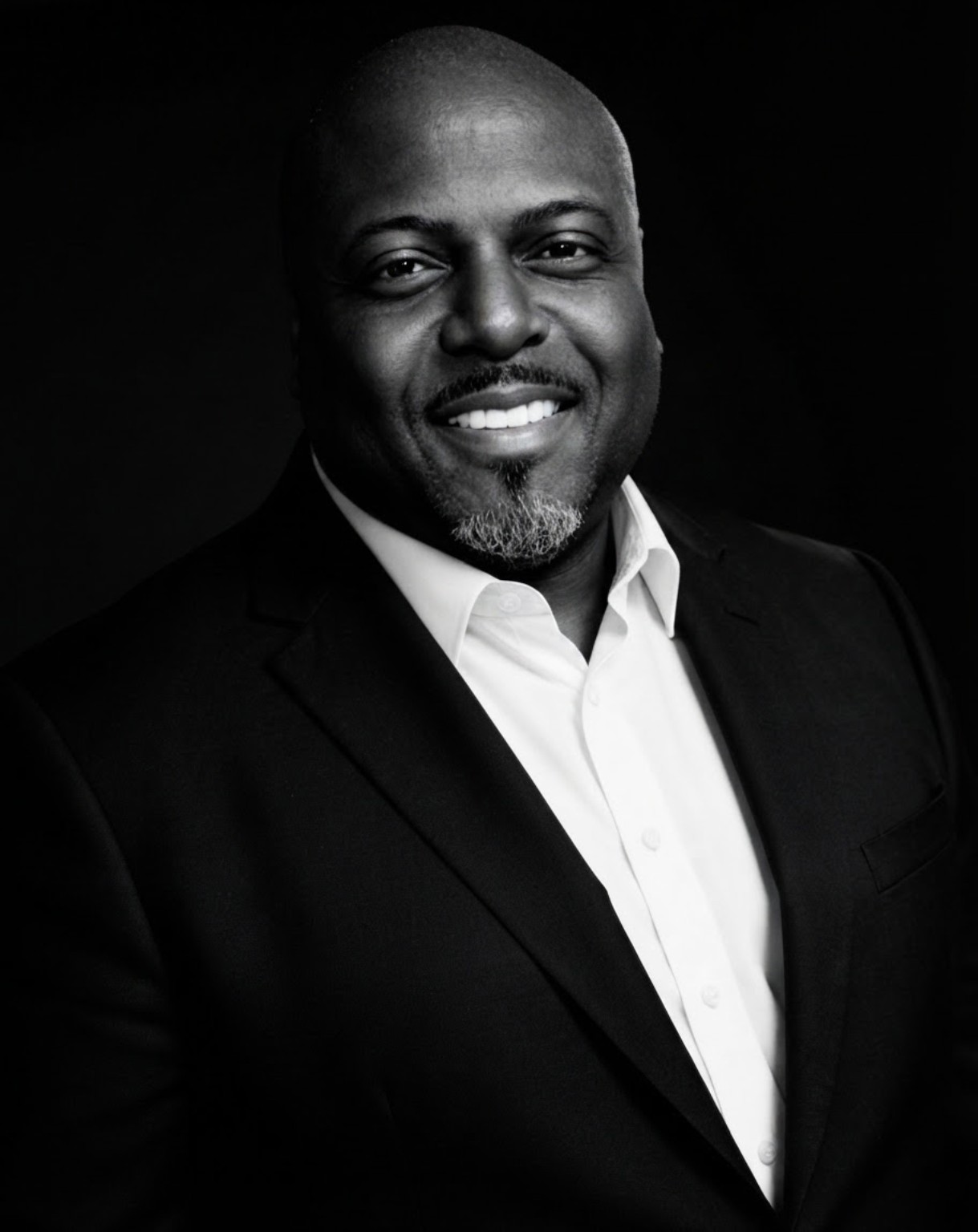
Rev. Dr. Gerald F. Poe Jr.
Founder and Chief Executive Consultant of PoeTech Global Consulting. Technologist, strategist, veteran, aviator, and cross-sector advisor with more than three decades of experience spanning AI, energy, sustainable data centers, telecommunications, UAS, healthcare innovation, public infrastructure, and venture development.